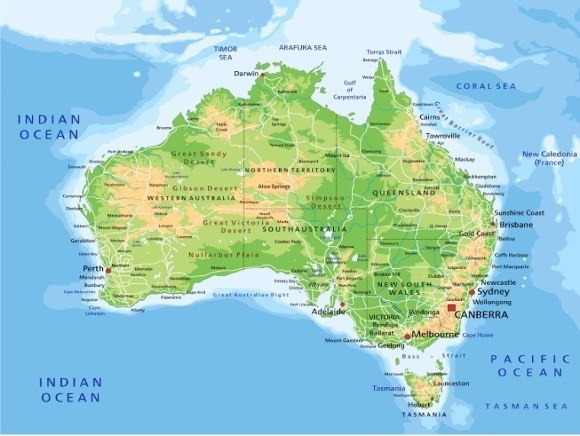
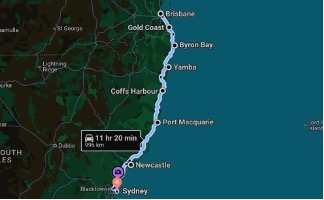
It takes 12 hours to drive from Brisbane to Sydney (916km)
Sydney:
Australia’s capital is Canberra, situated in the southeastern Australian Capital Territory, between Sydney and Melbourne.
Officially named in 1913, Canberra was chosen for its neutral location.
Mrs Carol Kohleis is married and has got adult children and grandchildren. Now retired she worked in Brisbane as a nurse.
Homework
reading:
Carol is retiring from her nursing role after an incredible 51 years of service.
She began her journey at just 16 years old and completing her enrolled nurse training at the School of Nursing at Pontefract General Infirmary.
Over the years, Carol has worked across all of our sites and will be deeply missed by both colleagues and patients.
Reflecting on her career, she said:
“I’ve loved every minute. The NHS has been my second home – and I’ll always be proud to have been part of it.”
We wish you all the best for your retirement
She has bought a flat in Volterra, a town chosen because her husband likes the countryside, ancient towns and Italian food.
Her favourite food :
spaghetti, steaks, fried fish, beef, zuppa..
She has visited many places in Italy:
Puglia, Rome, Arezzo Bologna, Padova, Verona, Udine, 5 Terre, and
in Europe : Vienna, Budapest and Slovenia.
The majority of the Australian people live on the costal towns becouse the climate is good and the weather is fine.
Australian animals:
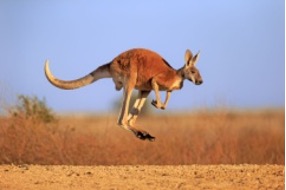
Kangaroo
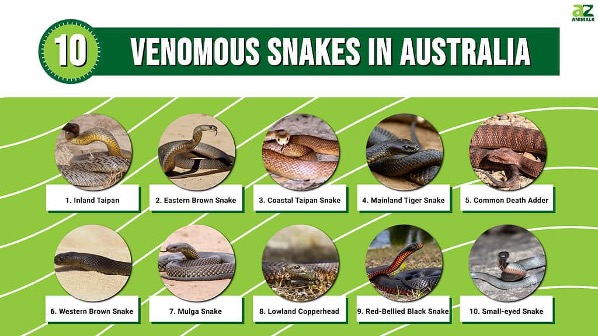
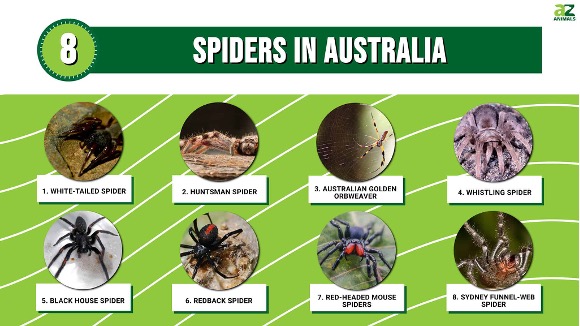
There are many poisonous snakes and spiders in Australia:
Poisonous/ venomous snakes
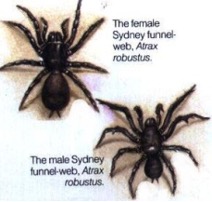
Spiders: Australia has a number of highly venomous spiders, including the Sydney funnel web spider, and the redback spider whose bites can be extremely painful and have historically been linked with deaths in medical records.
Koala: (In danger of extintion as many are killed on the roads and farmers move with their cattles to their country).
There are large farms in australia ( cows + sheep)
Australia is very wealthy: mines of Gold, and coal but a very few petrol.
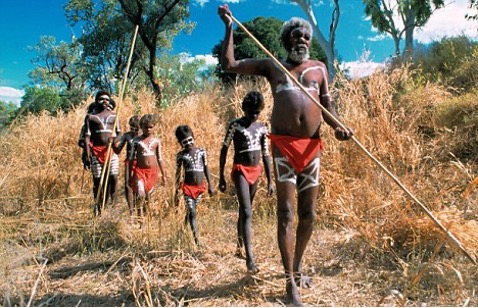
Australian Aboriginal peoples are the Indigenous peoples of mainland Australia and its islands representing the world’s oldest continuous living cultures, with origins over 60,000 years old, possessing diverse languages, traditions, and deep spiritual connections to the land through concepts like the Dreamtime, facing historical injustices, and continuing to enrich Australia’s cultural landscape today.
She says In Australia there are not dialects or food variations like in Italy.
Health care is very good in Australia.
There are private and public schools but the private ones offer a better education.
Lesson 7 – English course by Ex Prof. Maurizio Righi
20th January 2026
Check your HOMEWORK
NAME Carla SURNAME Luti DATE 16 gennaio 2026
TRANSLATE into English:
1) Perché ieri non hai studiato con i tuoi amici? Perché non ero a casa! Why didn’t you study with your friends yesterday? Because I wasn’t at home.
2) Avete mai bevuto una birra chiara con quei due simpatici amici di Coventry e con le loro ragazze? Have you ever drunk/had one LAGER with those two nice friends from Coventry and their girls?
3) Che fortuna! Mentre studiavo Tom è uscito con loro.What a luck! /How lucky!While I was studying Tom went out with them
4) Perché ora guardi la TV e non studi inglese?Perche ho appena studiato inglese!. Why now* are you watching tv * and not studying English ? Because I have just studied English
5) Da quanto tempo aspetti la tua ragazza? Da ieri ma non è ancora tornata ma torna fra 5 minuti. How long have you been waiting for your girlfriend? She left yesterday but hasn’t come back yet. She’ll be back in five minutes./ Since yesterday but she hasn’t come back yet , but she is coming back in five minutes.
Look at this picture: and write a story using the past tense.
1. Here we have/here I can see.. John’s and Mary’s photo .
2. they are at the cinema in the centre of the city
3. They are watching a 3D animated film
4. That ‘s why they are wearing special glasses
5. The film was about a cat and a mouse (Tom and Jerry) .
6. While they are watching they are eating some popcorn
7. They seems to be laughing and enyoying a lot/having a lot of fun!
Plese note:
This part is not relevant to the description of this image :
8. When (they went) out they met a couple of friends .
9. Then They decided to go to dinner (to dine) together.
10. At the restaurant they ate a pizza and drunk a lager.
Look at this picture and write a story using the past tense.
Last year Peter and Monica went to the cinema. The cinema was in London It was the Odeon in Leicester Square. There were a lot of people in the Odeon Cinema Hall . They bought a paper cone of popcorns. (Paper cone= cono di carta) While watching they were eating some popcorn They both ( Both of them) wore 3D glasses. All the people behind them wore 3D glasses. They looked very happy they were smiling. They all spent/had a lovely afternoon there.
A Very Short Summary:
Last year Peter and Monica went to the Odeon cinema in Leicester Square, where they spent a lovely afternoon.
There were lots of people behind them all wearing 3D glasses and looked very happy because they were smiling.While watching the film, Peter and Monica also wore 3D glasses and looked very happy while eating some popcorn.
Notes:
to take a photo/ to get a shot
= scattare/fare una foto
Now come here to take a photo with me for my album.
Ora vieni qui a fare una foto con me per il mio album.
He carefully aimed at the moving object to get a shot.
He prefers to watch newer movies rather than rewatching older classics.
Preferisce guardarefilm più attuali piuttosto che rivedere i vecchi classici.
to see
It’s sad to seechildhood best friends grow apart as they age.
È triste vedere i migliori amici d’infanzia allontanarsi con l’età.
to look at
They like to look at the sea and smell the salty air.
A loro piace guardare il mare e l’odore della salsedine.
Present continuous:
I am studying.
I am a student and I am studying finance.
Sono uno studente e sto studiando finanza.
Past continuous
I was studying.
At that time, I was studying hard for my final exams.
A quei tempi, studiavo duramente per gli esami finali.
To give/gave/given ( dare/detti/dato)
Give me the book/ give the book to me
Dammi il libro= dai il libro a me
Give him the book/ give the book to him
Dagli il libro= dai il libro a lui
Give her the book/ give the book to her
Dalle il libro= dai il libro a lei
Give us the book/ give the book to us
Dacci il libro= dai il libro a noi
Give them the book/ give the book to them
Dai loro il libro= dai il libro a loro
to meet /met/met ( incontrare, incontrai, incontrato)
yesterday I met Peter at the bus stop = Incontrai/ ho incontrato* Peter alla fermata del bus ieri
To drink/drank/drunk (bere/bevvi/bevuto)
I drank a lager yesterday. = ieri bevvi/ ho bevuto* una birra
To go/went/gone (andare/andai/andato)
Go home! = Vai/andate a casa!
Who went there by bus?Chi ci è andato in autobus?
Who didn’t go there by bus?Chi non ci è andato in autobus?
Who did you meet at the cinema yesterday? I didn’t meet anyone.
Chi hai incontrato al cinema ieri? Non ho incontrato nessuno.
Note:
In inglese non esiste il passato prossimo ma il presente perfetto (Present Perfect)
Il passato prossimo italiano si traduce in inglese con il passato remoto se ci si riferisce ad una azione ormai passata: Ex:
Ieri ho bevuto una birra chiara = I drank a lager yesterday.
Ho incontrato Peter alla fermata del bus ieri= yesterday I met Peter at the bus stop
Chi hai incontrato due giorni fa al cinema?Who did you meet at the cinema two days ago?
Chi hai incontrato al cinema il mese scorso?= Who did you meet at the cinema last month?…
Doppio Accusativo:
Il “doppio accusativo” in inglese si riferisce a verbi che reggono due complementi (diretto e indiretto) nella stessa frase, spesso permettendo di invertire l’ordine con l’uso della preposizione “to” o “for”.
Gli diedi un libro= “He gave me a book” /”He gave a book to me”
Un mio amico di Londra= A friend of mine/ One of my friends.
Due tuoi amici= Two of your friends/Two friends of yours…
Verbi che reggono il doppio accusativo
Verbi di dare/portare/inviare: give, bring, send, offer, lend, sell, buy.
I gave him a present. (Gli diedi un regalo.) I gave a present to him. (Diedi un regalo a lui.)
Verbidire, leggere, scrivere: tell, read, write.
She told them the story. (Raccontò loro la storia.) She told the story to them (raccontò la storia a loro)
Verbi insegnare,chiedere: teach, ask.
He taught us English. (Ci insegnò l’inglese.) He taught enlish to us
They asked him a question. (Gli fecero una domanda.) They asked a question to him
Differenza tra “to” e “for”
Con “to”: Indica la direzione del trasferimento (es. I gave the book to Mary).
Con “for”: Indica il beneficiario (es. I bought the book for Mary)
Homework:
Read and translate:
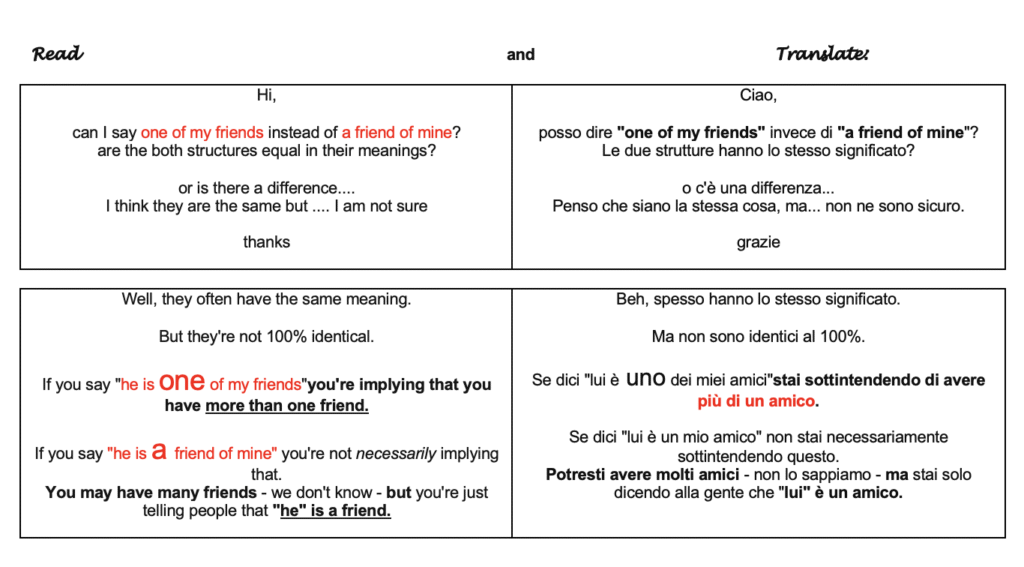
Hi,
can I say one of my friends instead of a friend of mine? are the both structures equal in their meanings?
or is there a difference…. I think they are the same but …. I am not sure
thanks
Well, they often have the same meaning.
But they’re not 100% identical.
If you say “he is one of my friends” you’re implying that you have more than one friend.
If you say “he is a friend of mine” you’re not necessarily implying that. You may have many friends – we don’t know – but you’re just telling people that “he” is a friend.
Say or Tell? Learn English with Simple English Videos(6.38)
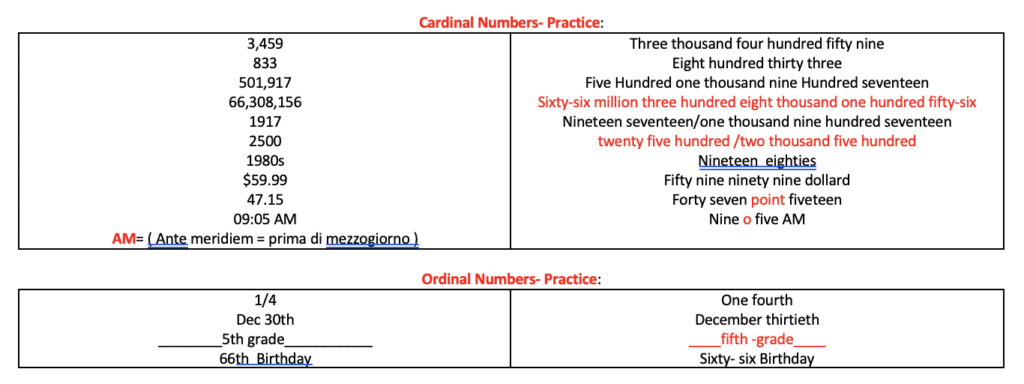
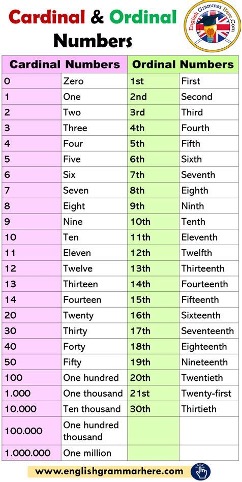
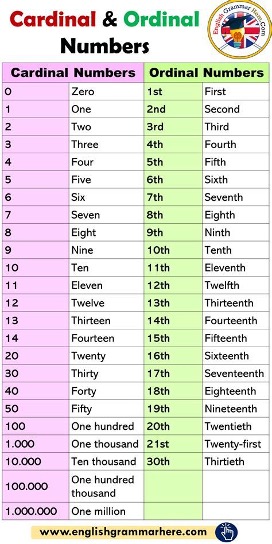
Learn these numbers by heart. (= impara questi numeri a mente)
Left= SINISTRA / Right= destra
Have a look at the above chart = Dai un occhiata al grafico sopra:
The ordinal numbers are on the left side (= i numeri ordinali sono sul lato sinistro)
The cardinal numbers are on the right side (= i numeri cardinali sono sul lato destro)
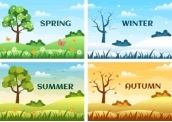
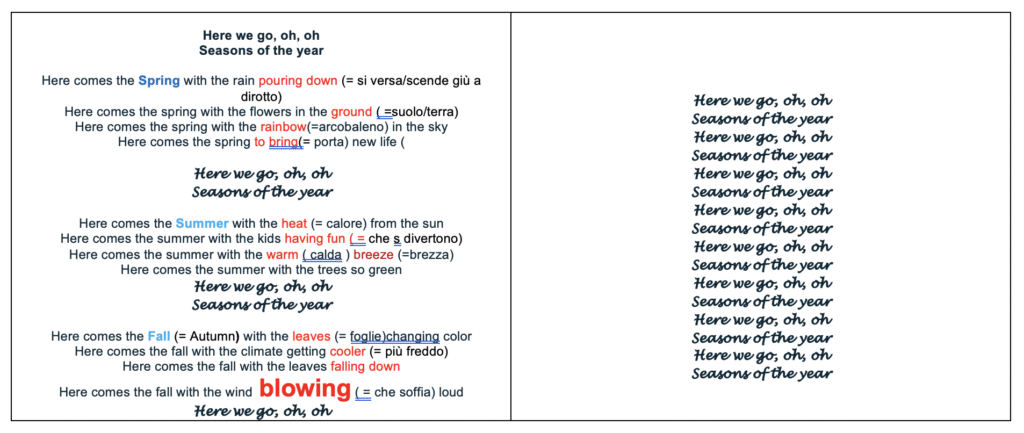
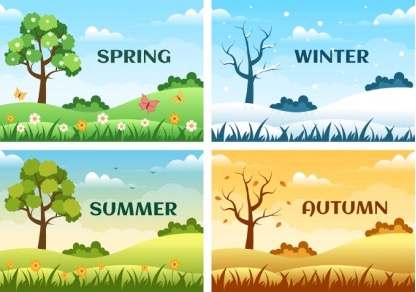
Learn by heart the 4 seasons (impara a mente le 4 stagioni )
The four Seasons
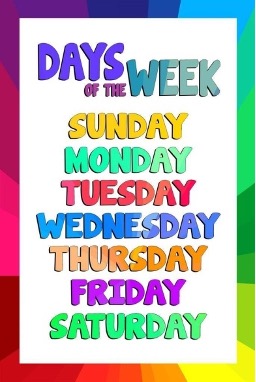
Learn by heart the Days of the week (= impara a mente i giorni della settimana)
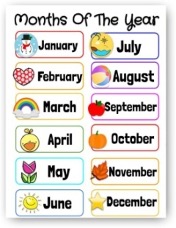
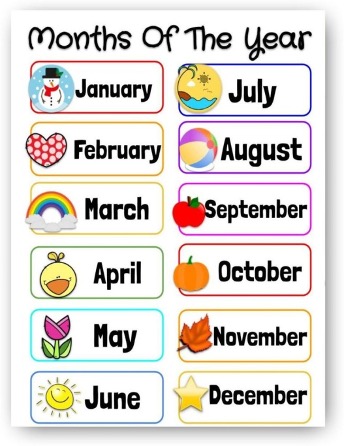
Learn by heart the Months of the year(= impara a mente i mesi dell’anno)
To be able to= potere
I /you/ he(she.it) /we/you/they Can = io posso /tu puoi /egli può /noi possiamo /voi potete/essi/loro possono
To have to= dovere
I /you/ he(she.it) /we/you/they Must = io devo/tu devi/egli deve/noi dobbiamo /voi dovetete/essi/loro devono
To Want = volere
I want
you want
he/she/itwants
we want
you want
they want
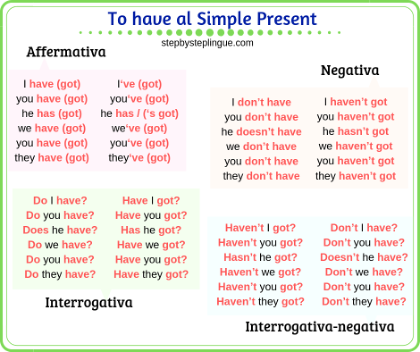
To have ( = Avere)
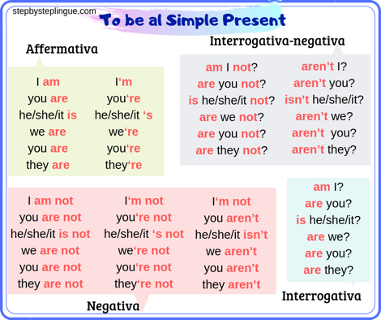
To be (= essere)
Present simple:
I -always.sometimes.usually.never.often.rarely/seldom..every moning – study.
Present Continuous
-Now,at the moment,this mornig,this afternoon,this evening,this month, this year…- I am studying.
Immediate future: Studio fra tre minuti I am studying in 5 minutes
Past (Passato )
Regular verbs(Verbi regolari)
Yesterday, last year/month/week..2/3 years/months/weeks ago.
I studied
Notes: (= note)
Love -Loved
Study – studied
Play – played
Past of to be:Passato di essere
IWas you were he was we were you were they were
Irregular verbs paradigms :
( = Paradigmi verbi irregolari):
To go – went -gone = andare, andai, andato
To fight – fought -fought =combattere, combattei combattuto
To drink –drank- drunk= bere, bevvi, bevuto
To buy -bought -bought = comprare, comprai, comprato
To sell- sold -sold = vendere, vendetti, venduto
HOMEWORK
Translate into English =traduci in inglese
A) NAME_________________SURNAME_____________________ DATE_____________________________
TRANSLATE into English:
1) Perché ieri non hai studiato con i tuoi amici? Perché non ero a casa! _____________________________________________________________________________________________________________________________________________________
2) Avete mai bevuto una birra chiara con quei due simpatici amici di Coventry e con le loro ragazze?________________________________________________________________________
3) che fortuna! Mentre studiavo Tom è uscito con loro.___________________________________________________________________________________________________________________________________________________
4) Perché ora guardi la TV e non studi inglese?Perche ho appena studiato inglese!. ________________________________________________________________________________________________________________________________________________________________
5) Da quanto tempo aspetti la tua ragazza? Da ieri ma non è ancora tornata ma torna fra 5 minuti. ____________________________________________________________________________________________________________________________________________________________________________________________________________________________________________
Look at this picture and write a story using the past tense.